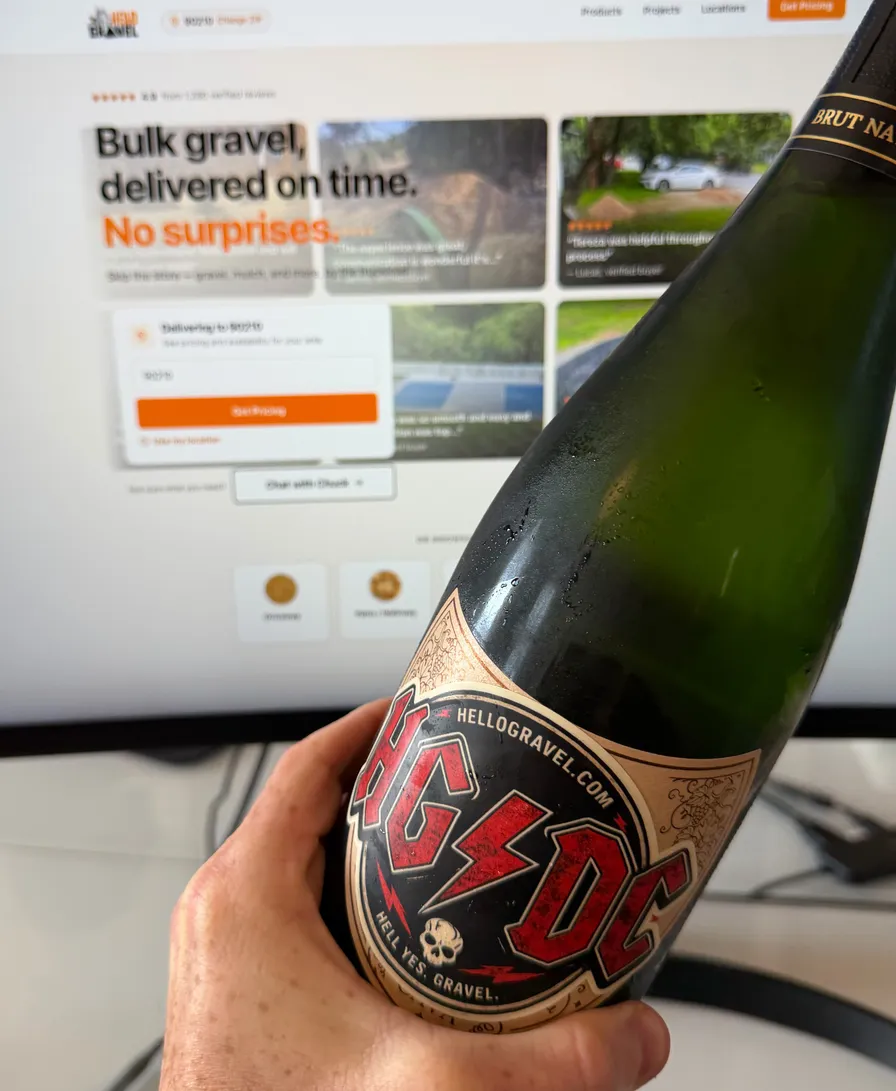
The crashout that started it
The catalyst for this project was a crashout I had in Slack one evening in March.

The crashout that started HG/DC.
Truthfully, the site had been wearing us down for almost a year. But my crashout was the thing that made me open an empty Claude Code project and say, “Let’s rebuild this.”
Our site was running WordPress and WooCommerce on WP Engine. It had 56 plugins, many of them custom. It was slow and heavy enough that we throttled legitimate search crawlers to keep it stable. We were paying about $4,000 a month for WP Engine.
The bigger problem was how hard it had become to change anything.
We had lots of minor issues that needed cleaning up. None of them justified slowing down more important work, so they stayed. The backlog grew. It was hard to look at our website and know it was no longer something we loved or felt proud of.
At the same time, Claude Code was getting good enough that we could move much faster. Every change still had to pass through WordPress, WooCommerce, MySQL, and the plugin stack.
The next day I wrote a proposal in Slack. I said the stack seemed ancient, it was not conducive to agentic coding or fast iteration, and the drag was going to continue. I had started playing with Astro and Cloudflare on the side. The rebuild was still an experiment, but it looked fast, cheap, and much easier for agents to work in.
That side project became HG/DC.

The advice was not to do this
Joel Spolsky’s turn-of-the-century essay Things You Should Never Do, Part I is the classic version of that warning. Rewrites throw away years of accumulated fixes and edge cases. Old code may be ugly, but it contains a lot of knowledge about the business.
We were also changing much of the URL structure while the site received tens of thousands of visitors each week. Google’s own site-migration guidance warns about temporary ranking fluctuations and recommends careful redirect mapping, updated canonicals and sitemaps, and post-launch monitoring.
Before current AI tools, that advice made more sense. Rebuilding a production site was harder to treat as a disposable experiment.
But with AI this rebuild started as a cheap side project. If it had no legs, we could throw it away.
We used Garry Tan’s gstack skills to plan and implement the work. “I’ve got a gstack going on that” became a normal thing to hear around the office. Garry’s Boil the Ocean piece gave us permission to take the ambition seriously.
We sent 5% of traffic first
On April 21, we sent 5% of site traffic to HG/DC for our first canary release.
The new site was incomplete but the point was to get real people into it, then watch PostHog session recordings and see what they did.

Our first real session!
We get enough traffic that even a few hours can produce plenty of sessions. A few people on the team would watch recordings, call out problems, and fix them. Then we would run another canary.
The rollout moved from 5% to 10%, then 25%.
During an early canary we got an order on a day when roughly 100 users visited the site. That put the conversion rate around 1%, more than double what we had been running. Not statistically meaningful, but still a huge confidence boost!
There was a day we also accidentally sent 100% of traffic to the new site for about 12 hours when we meant to send 5%. That was not the rollout plan, but it gave us more evidence that the site could hold up.
By the time we moved 100% of traffic on June 8, we had watched enough people use HG/DC that the cutover did not feel especially scary. We knew traffic and conversion could break. We also knew we could roll back to WordPress.
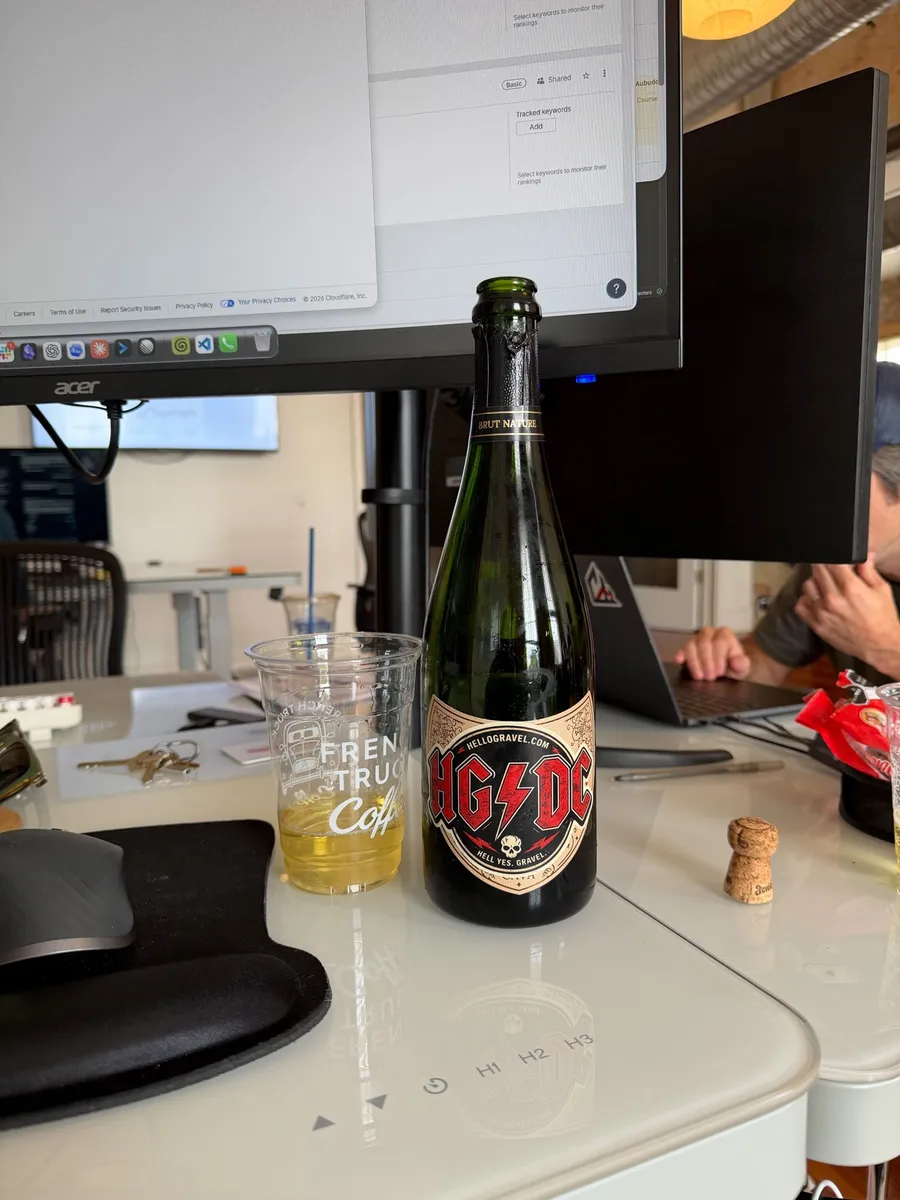
The canary missed error 1101
Once the full site was under load, pages started failing with Cloudflare error 1101.
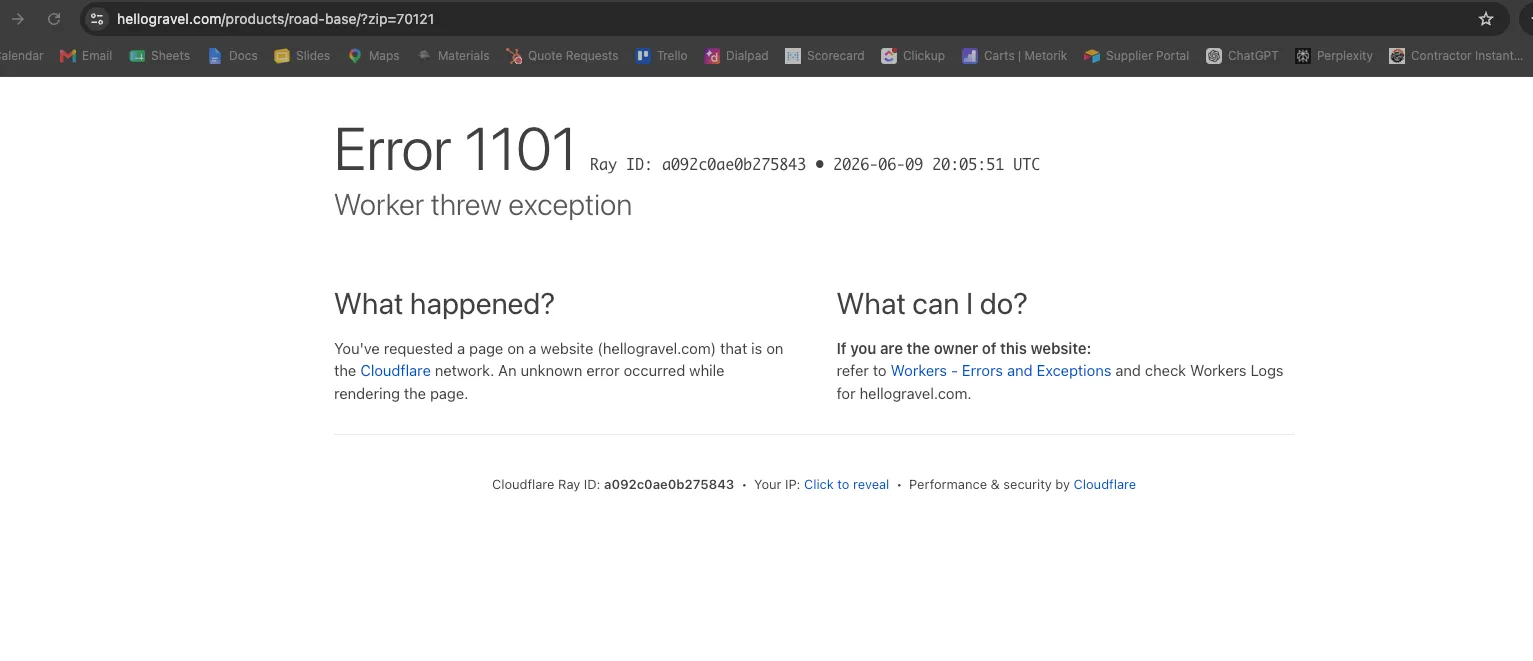
The random Worker failures that only appeared under full production load.
The failures were random and frequent. We had not seen them during the canaries. The error was vague, and there was no smoking gun in the logs. Cloudflare’s documentation describes 1101 as a Worker exception, which still leaves plenty of possible causes.
The timing was absurdly good. We launched HG/DC on June 8. Anthropic released Claude Fable 5 on June 9.
After a very long day on June 10, I gave Fable the logs and left it running while I went to sleep. It opened PR #288 just before 1 a.m. I woke up and merged it around 6:40 a.m. on June 11.
Our diagnosis was that the Cloudflare Workers were running out of memory under full production load. The errors stopped!
Anthropic suspended access to Fable on June 12. We had a three-day window between its release and suspension, and it fixed the exact production problem we had spent days chasing.
Then people across the company started shipping
The first HG/DC pull request was opened on March 12. We hit PR #1000 on August 25, 166 days later.
| Month | PRs opened |
|---|---|
| March | 28 |
| April | 72 |
| May | 53 |
| June | 322 |
| July | 291 |
| August | 258 |
The June spike came as we launched the site and started fixing what real traffic exposed. July stayed almost as busy.
What excites me most is who was pushing those PRs. Dan, our CEO, has opened around 170. Alan, our Head of Growth, has opened more than 80. Carah, our Market Expansion Manager, has opened more than 100. Whitley, our Operations Manager, and Max, our Sales Manager, have both shipped changes too.
The team gained confidence in the guardrails around PRs and CI. If someone saw something that needed fixing, they could tell Claude Code instead of writing a ticket and waiting.
PostHog Self-driving flooded the repo
PostHog has been one of the biggest wins of the rebuild. We use it for analytics, session replay, feature flags, and experiments. Since launch, we have probably run around 30 A/B tests.
Consolidation was one of the goals for HG/DC. The old WordPress site had nearly 30 tracking services and more than ten client-side scripts. The new setup reduced that sprawl and made PostHog the main place we watch behavior, replay sessions, and run experiments. GA4 and Klaviyo still have specific jobs, but we no longer have to wire every new idea through a pile of unrelated tools.
On June 30, I enabled PostHog Self-driving. Within 20 minutes it had opened 14 PRs. The total reached 22 that day.
The PostHog bot account eventually opened 107 PRs across the repository. A later review looked at 52 of them. Thirty-three merged and 19 closed. Thirty-two were mostly error-noise filters.
PostHog found real issues, but it was far too eager to open one PR for every fingerprint it found.
The broader queue had the same problem. More people and bots were shipping, and every merge made somebody else’s branch stale.
I became the merge train
For a while, getting a PR merged was a race.
You would rebase, wait for CI, and get ready to merge. Then somebody else’s PR would land first. Your branch was stale again. Rebase. Run CI. Try again.
I started handling the queue in the evenings. I had a long prompt that I would drop into Claude Code. It inspected every open PR, fixed conflicts and review issues, recommended a merge order, and babysat the queue through rebases and CI.
It worked, but now I was spending every evening managing the merge train.
So I stood up a Hermes agent named Merge Boy.
Merge Boy works the queue oldest first. It babysits rebases and CI, then shepherds a PR through merge or makes noise when something needs human eyes.

An August 24 internal report counted 55 guarded merges and a median pickup-to-land time of 42 minutes.
People can mostly submit a PR and forget it.
PostHog has written about the same pressure in Stop being the code review bottleneck. We had already learned that rebasing, CI, and merge coordination could not depend on me managing every PR by hand.
The site can fix some of its own problems
I created another Hermes agent named SEO Boy to monitor technical SEO and fix scoped issues.
SEO Boy watches Ahrefs, Google Search Console, BigQuery, BrowserStack scans, and Chrome UX Report history. It checks crawl data, redirects, sitemaps, hreflang, metadata, and broken links.

It can diagnose issues and submit PRs, which then go through Merge Boy’s guarded process. For these scoped issues, the site is self-healing. We sometimes wake up to a couple of bot-created PRs that merged overnight. Exciting and scary!
What changed
WP Engine was costing about $4,000 a month. Replacement hosting on Cloudflare now costs under $300 a month. That is more than $44,000 in annualized savings before counting the time we no longer spend fighting the old stack.
The rebuilt site is faster and feels more trustworthy. Our user-to-order conversion rate has increased.
The URL migration held up. There was no SEO traffic disaster. We stopped throttling bot traffic and opened the site to more crawlers.
HG/DC reached PR #1000 on August 25. 166 days!
After this experience, my bias is to start the ambitious version. Open your favorite LLM and tell it what you want to rebuild and what the requirements are. Starting the experiment costs almost nothing.